Download Image
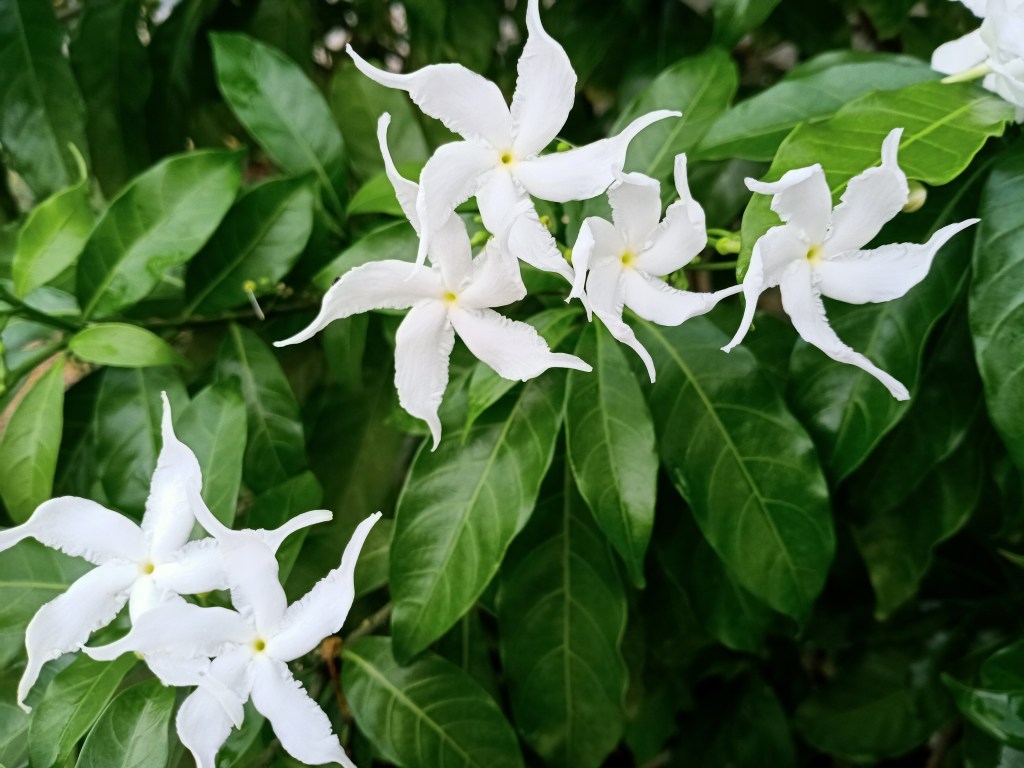
Crape jasmine, commonly referred to as the pinwheel flower, is a captivating plant that has intrigued many gardeners. This lovely plant is also called the East Indian rosebay or crepe jasmine and originates from Southeast Asia, South Asia, and China. Its charm is hard to find in other plants. Many people in villages and towns grow this tree near their homes. It grows in dense clumps on the top of the tree. If you look at its flowers, they look like little white stars on the tree. Let’s explore the special features it offers.
Features of Crape Jasmine
The leaves of the crepe jasmine plant are a dark green shade. They can grow to heights of 5 to 6 feet. The flowers resemble a spinning wheel and are related to species such as Vinca and Nerium. These flowers are white and bloom primarily in spring. Throughout the year, blooms can appear at various times.
Scent
Crape jasmine emits a pleasant scent. When the flowers move in the wind, they give off a delightful fragrance. Their white color captures the attention of all.
Soil
Crape jasmine thrives in typical clay soil as well as red clay soil. It requires minimal fertilizer. Indoor growth demands little in the way of fertilization. However, for those cultivating it as a crop, proper nutrients with fertilizers should be applied.
Occasions
Due to their white color, these flowers symbolize purity. In various Asian cultures, they are utilized in ceremonies and weddings.
Climate
Crape jasmine flourishes in tropical and subtropical environments. It shows impressive strength against different temperatures and can endure cold down to 5 °C and heat up to 45 °C. Caution is necessary during such extreme temperatures. High heat may cause the leaves to droop and the branches to become dry. Likewise, in cold weather, the leaves may turn brown or curl. In rural areas, these plants are largely cultivated outdoors, so they require care to manage climate shifts.
Irrigation
It is important not to overwater them. Excessive watering can lead to root rot. Depending on the soil, watering once or twice weekly is usually sufficient. Sunshine is less intense during the rainy months, so it is advisable to reduce watering. If water levels are too high, the risk of root rot increases, which can damage the plant. Thus, extra caution is needed in the rainy season. However, during dry periods, they need more water.
Fertilization
To achieve healthy blooms without blemishes, suitable fertilizers should be used. Nitrogen is particularly effective for this purpose, promoting plentiful flowering and healthy growth. Applying fertilizers every three to four weeks can help ensure robust and flourishing plants. The amount of fertilizer used should be tailored to the season; increase it slightly in summer and decrease it during winter. The nitrogen supplied serves as the ideal nourishment for the plant.
Pruning
The crape jasmine tree is a long-lasting plant with green foliage and white blossoms. In late spring, pruners trim away dead branches and leaves to promote additional flowers and maintain a fuller appearance. This process stimulates new growth on the trimmed branches and also aids in increasing flower production. Furthermore, it helps the tree maintain its health.
Medical Properties
Cape jasmine has some medicinal properties. Its bark and roots help in reducing minor fevers, urinary problems, muscle weakness, diarrhea, and flatulence. Not only that, but its fruits also control ulcers, burns, toothaches, swelling, and irritation. Some research suggests that it also plays a major role in curing jaundice.
Conclusion
Crape jasmines are commonly found in gardens. Their lovely white flowers captivate many onlookers. The scent of these blossoms brings joy to those around. You should also consider creating a plan to cultivate these at your residence.
Read This
- Diwali wishes in English with flower art designs
- Latest Happy Dussehra images with flower art designs
- 12 Ganesh Chaturthi wishes with flower art
- Happy Birthday Sister Images with flower art
- Best Rakhi wishes for brother in Hindi with flower art
- Rakhi wishes images with beautiful flower art