Download Image
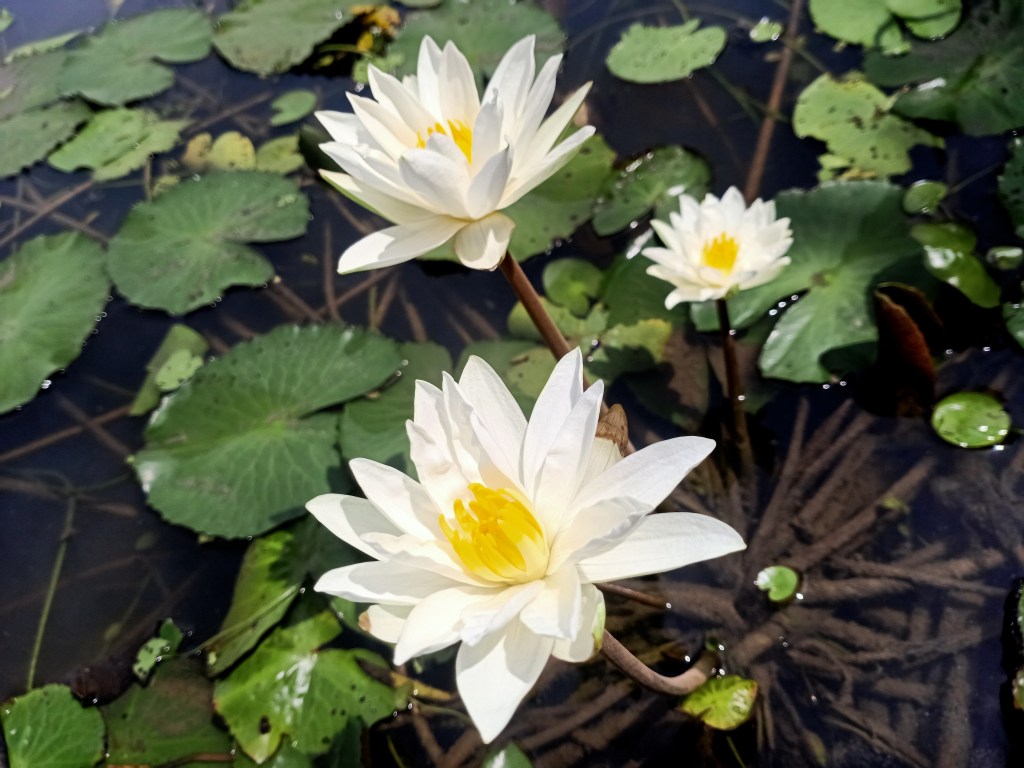
These water lilies are mostly found in small canals and streams. These water lily flowers are grown in water. Although water is God’s creation, these plants grow from the water itself without anyone raising them. When they are planted on the side of the road, they look wonderful in canals or ponds. Let us know about the importance and value of these beautiful flowers.
Where did they start?
These water lilies belong to the lily family Nymphaeaceae. They bloom only when the weather is mostly humid. Water lilies started in South America, North America, Europe, Asia, and Africa. These lilies are classified into two types. They are hardy and tropical water lilies. Hardy waterlilies can withstand winter temperatures. Tropical water lilies require high temperatures. These lilies come in a combination of white, pink, yellow, blue, and purple colors. They look very cute and beautiful when seen in ponds.
Forms
The leaves of these are round and wide. If water falls on their tips, it will slide like a fish’s coat. These lilies have a strange appearance. That is, they bloom profusely during the day and fold in the evening. Their leaves are spread out in large ponds, making the entire pond look green.
Priorities
 Download Image
Waterlilies play an important role in the marine environment. These leaves provide shade to aquatic organisms. By absorbing nutrients from the water, water lilies contribute to the cleanliness of the water and help maintain a healthy ecosystem. Growing in ponds, they add beauty to the pond itself. They are very deep in the water. Therefore, harvesting them is not easy. Some people, however, go into the water no matter how deep it is to harvest them. These water lilies are also used for worshipping the goddess and for decoration. These attract bees very well.
They also have tubers. That’s why we call them water lily tubers. These are the feet of this plant. That is, they are like roots supporting it. When we were children, we used to go into the water in small canals and ponds to look for these lotus tubers, cut them, and bring them home to eat. Eating does not mean eating the whole tuber. we cut these tubers and eat the seeds inside them. One strange thing about this lotus tuber is that the seeds in it are finger millets. Apart from that, there are two or three types of seeds in these.
Some of these seeds are bitter to eat in some tubers, and some are neither bitter nor sour and are good to eat. Young children eat these in droves. When the summer comes, they go swimming in ponds during vacations. Cut these tubers and bring them home. It is very difficult to cut these bulbs. Because they are at the bottom of the water. They are very much buried in the mud. Some plants have bulbs. Some plants do not. These have various strange features.
Children play by making garlands with the stems of these water lilies. It is very easy to make garlands with their stems. Since their stems are thick and soft, they are cut into small pieces and left to dry. The entire stem is dried in this way. Now the garland is ready. Since the water lily flower is with the stem, the garland hangs below. Children wear the garlands made in this way around their necks and play a lot.
Conclusion
Water lilies, which are found in small canals and ponds, sparkle with various colors. As if floating on the water, when water falls on their leaves, the water slides off them, which is a great way to teach us. The way they bloom in the sunlight during the day and then curl up in the evening is a fascinating sight. These are not plants that grow on land but in water.