Download Image
It doesn’t smell like jasmine. It lacks the grace of a lily. It isn’t as lovely as a rose. However, there is an unquenchable desire for that flower. This shows the remarkable appeal of the Kanakambaram. Its vibrant hue and delicate texture set it apart. That’s the reason why girls enjoy adorning their hair with them. That’s all there is to it, in the floral offerings for deities and during marriages. The charm of the Kanakambaram is unique. Additionally, the plant serves as an effective remedy. Consequently, flower farming has become a lucrative business, benefiting farmers financially.
Similar to Kanakambaram… What is the scent? Who wears them? Many people enjoy wearing these flowers. A string of Kanakambaram worn in groups of two or three looks lovely. Presently, fewer individuals style their hair in braids, but in earlier times, girls often wore a langa voni along with a garland made of red and yellow davanam or machipatri in their braids. Moreover, even a fragrant jasmine garland appears more beautiful when complemented by kanakambaram. This is why women have always cherished this flower.
Uses
The demand for kanakambaram is very high in Tamil Nadu and Karnataka. They are essential in the floral arrangements for deities and are also prominently featured in wedding decorations. Additionally, they are used for creating flower braids. This leads to their price per kilo rising to around one thousand to fifteen hundred rupees during festivities and weddings. Furthermore, a significant portion of the kanakambaram we cultivate is exported to countries like Singapore and Malaysia. In those places, extracts from this flower are utilized to treat fevers, headaches, and various pains.
It also plays a role in Ayurvedic medicine. It is said that crushing the leaves can alleviate toothaches, and if the stem is ground with turmeric, it may help with skin ailments. To prevent gum issues, a paste made from the seeds can be applied to the teeth. The plant’s roots are also used to combat viruses affecting the cervix. In addition, flowers mashed with pepper can heal ulcers. Interestingly, the Modern College’s Department of Biotechnology in Pune asserts that these flowers can eradicate bacteria found on mobile phones. Whatever the cause, it is significant. The price continues to rise every day.
 Download Image
That color is different!
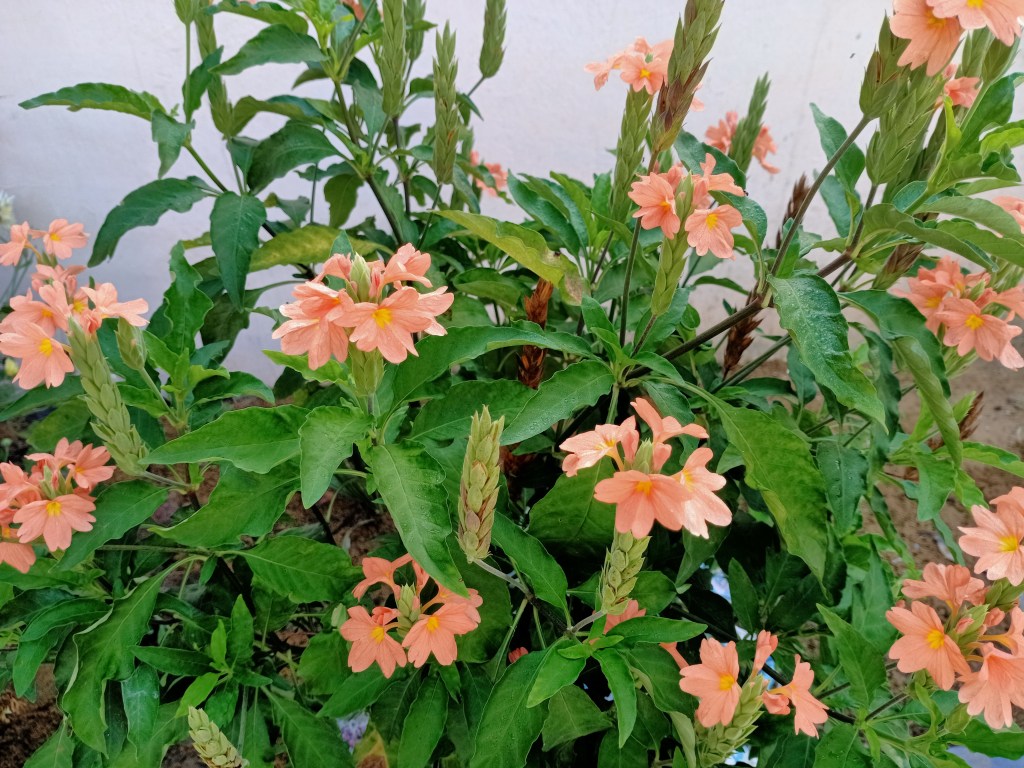
All the Kanakambaras that bloom with soft petals are seen in the same red-orange color. Kanakambaras are different in color… As if to say, their name has become a color. There is hardly anyone who does not like that color. A girl’s wardrobe must have at least one kanakambaram-colored dress or skirt. Along with this color, there are Kanakambaras that bloom in orange and yellow, light pink, red, green, and blue colors.
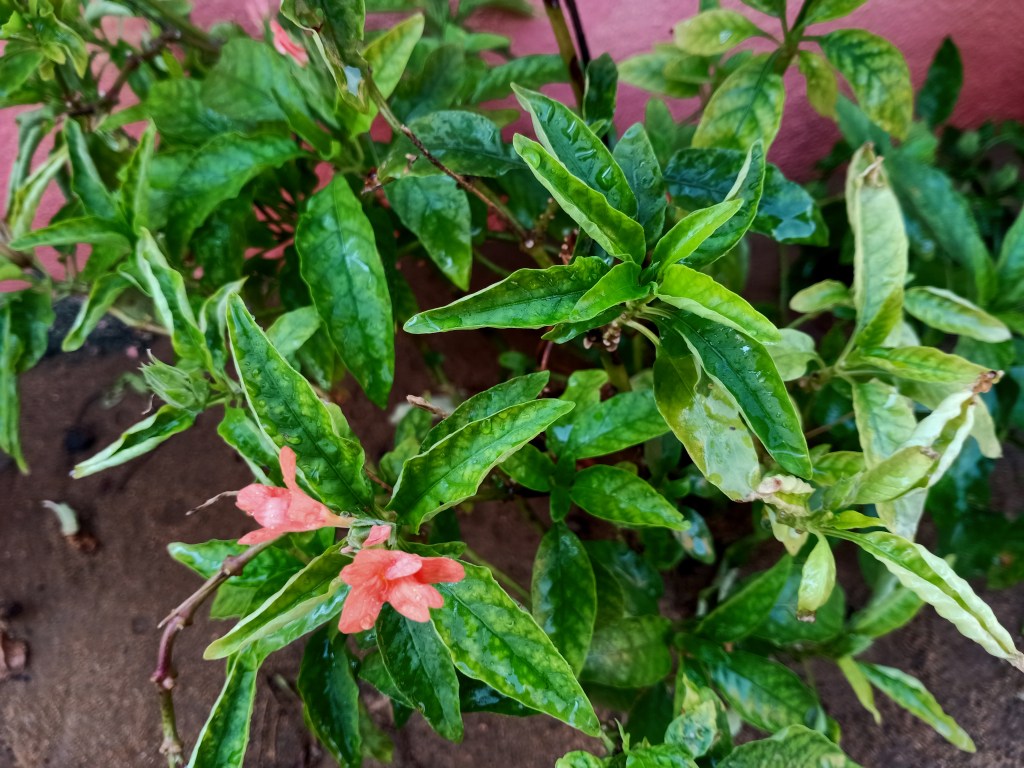
Kanakambaras are called variously as Priyadarsha, Fire Cracker… Although they are not as dense as roses and lilies, the Kanakambaras that bloom in full bloom are breathtaking in their strange beauty. If Kanakambaras plants blooming in red, orange, and yellow colors are in the yard, all the eyes of those who come to the house are glued to them. If left on the tree, they will remain there for four to five days without fading. That is why there is still no garden without this flowering plant in the villages. Not only in the villages but also in towns and cities, those who grow flowers plant at least two or three Kanakambaram plants in pots.
Because jasmine and chrysanthemums come in abundance only during these times. But Kanakambaram keeps blooming throughout the year. Moreover, if it gets wet, the dried seeds crackle and make children laugh. Kanakambaram… is also the state flower of Goa. These flowers are a must in many ceremonies there. There, Kanakambaram is called Aboli. Every year on March 10th, the Aboliyancham festival is organized at the Nirmala Institute of Education, a teacher training school. On that day, the markets there are full of Kanakambarams. That is why the Horticulture Department there is taking precautions to ensure that this flower does not become extinct.
 Download Image
In terms of varieties, there are two or three types of Kanakambaram that fade quickly, including small (Lady) and large forms that were traditionally seen. Nowadays, many new hybrid varieties have been introduced. Venkatapathi Reddy from Puducherry, who is known for his good character, greatly influenced this change. Growing a Kanakambaram garden for his livelihood, he became fascinated by a particular plant with a long stem that was fully extended.
Upon consulting local horticulturists and showing them his find, they identified it as Delhi Kanakambaram and provided him with three additional plants. This encounter marked the start of his journey. He has conducted countless experiments with Kanakambaram using techniques like gamma radiation and pollen crossing, as well as chemical and UV mutation. His efforts have resulted in the creation of over five hundred varieties, earning him numerous accolades at both national and international levels.
Typically, Kanakambarams are seen in shades of yellow and orange. However, in his garden, there exist many varieties, such as Delhi (Saudarya), Abdul Kalam, Lakshmi, Kanakadhara, Vijaya, and Vasu. Among all, Delhi Kanakambaram is the finest, reaching a height of 17 cm and blooming in red with up to 80 flowers. It produces up to 25 kg per acre daily from January to August. Although production slightly decreases during the rainy season, Venkatapati states that when grown in a poly house, it can bloom year-round.
The Abdul Kalam type yields flowers that are 1.5 times bigger than those from Delhi. Each bloom weighs 80 mg. This variety of Abdul Kalam blossoms in a deep red hue and is ideal for shipping. The Lakshmi-type flowers in orange, while the Titia Yellow type is striking in its shade of yellow. Additionally, he has developed seedless varieties. Some flowers can even have seeds in two different colors. Venkatapathi was the pioneer farmer to establish a tissue culture lab and propagate the Delhi variety by growing new branches. Kanakambarapati initiated the Lakshminarayana Crossandra Center, offering free seedlings to women in need who rely on farming for support.
Table of Contents
Cultivation details
With careful attention, a kanakambaram garden can produce between 1800 and 2500 kg of flowers annually. Therefore, horticulturists claim that cultivating kanakambaram for ten cents per acre will result in higher yields than other crops. It is believed that if marigolds are grown and sold, no one will face losses, and there will be earnings of at least two rupees for every rupee spent.
Consequently, this flower farming is gaining momentum in Tamil Nadu, Karnataka, and the Telugu states. In the Battalapalli village of Anantapur and Mushtikuntla in Khammam district, the Kanakambaram flowers are said to be thriving abundantly. Certain farmers in Mushtikuntla have banded together to cultivate marigolds along with vegetables year-round. They consulted the Indian Institute of Horticultural Research Center in Bangalore to understand the advantages of planting Kanakambar.
Typically, this plant begins to flower three months after it is planted, with most blooms appearing in April and May. Regardless of how it’s planted, those who appreciate Kanakambar can also cultivate it in pots and enjoy a rich display of flowers. Regularly removing dried husks and mixing them with rice washing water, porridge, and chicken eggs will result in beautiful blooms. “Let’s also cultivate the lovely Kanakambaram!”