Download Image
Introduction
Raksha Bandhan, sometimes known as Rakhi, is one of India’s most beloved festivals, representing the holy connection between siblings. The term “Raksha Bandhan” is derived from the two Sanskrit words Raksha, which means “protection,” and Bandhan, which means “bond” or “tie. ” Therefore, the bond of protection” is the literal meaning of Raksha Bandhan. Love, duty, and the strong emotional bond between siblings are all honored at this festival. It goes beyond biological connections to include the broader human values of care, responsibility, and oneness. Raksha Bandhan, which is celebrated with great joy and excitement throughout India and in Indian communities around the world, is significant not only religiously and culturally but also socially and emotionally.
Historical Context
Raksha Bandhan has ancient origins and is firmly established in Indian history, mythology, and customs. Numerous myths emphasize the core of the festival: the dedication to safeguarding and the sanctity of family ties.
1. The Legend of Draupadi and Lord Krishna
One of the most well-known tales connected to Raksha Bandhan is taken from the Mahabharata. To prevent Lord Krishna from bleeding when he hurt his finger while wielding his Sudarshan Chakra, Princess Draupadi tore a piece of her Saree and wrapped it around his finger. Krishna made a commitment to keep her safe from every danger, moved by her display of love and care. Later, at the infamous Cheer Haran (disrobing) event, Krishna kept his word by miraculously giving Draupadi an infinite supply of cloth, which preserved her honor. Raksha Bandhan is a bond of love and protection that goes beyond family connections, and this narrative is A splendid instance of it.
2. The Tale of Goddess Lakshmi and King Bali
The Bhagavata Purana and Vishnu Purana state that after Lord Vishnu defeated the demon king Bali, he promised to remain in Bali’s palace to protect him. But Goddess Lakshmi desired that her spouse go back to Vaikuntha. She paid him a visit to Bali while in disguise and knotted a holy string around his wrist, telling him who she really was later. Moved by her devotion, Bali granted Lakshmi a request, asking that Vishnu be freed. This tale demonstrates the sanctity of the rakhi while emphasizing the protective and emotional nature of Raksha Bandhan. As a symbol of love and trust.
3. Emperor Humayun and Rani Karnavati
In medieval India, there is a notable historical connection to Raksha Bandhan. According to legend, Rani Karnavati of Chittor, fearing an attack from Bahadur Shah of Gujarat, sought the protection of Mughal Emperor Humayun by sending him a rakhi. Humayun was moved by the act and immediately led his army to Chittor in order to protect her realm. This tale illustrates how Raksha Bandhan evolved into a symbol of unity and respect that transcends religion, caste, and community, even if he couldn’t get there in time.
4. King Porus and Alexander the Great
Raksha Bandhan is associated with Alexander the Great by another historical narrative. As part of his invasion of India in 326 BCE, Alexander’s wife Roxana dispatched a holy thread to King Porus with the plea that he refrain from hurting her husband. Porus hesitated to attack Alexander during the fight because he remembered the vow he had made to Roxana. This tale illustrates how the symbolic rakhi has the potential to overcome even political and military disputes.
 Download Image
Religious and Cultural Importance
Raksha Bandhan is a unique holiday in Indian society that symbolizes the values of love, care, protection, and responsibility. Beyond just tying a thread, it’s a party for moral principles and emotional connections.
1. A sign of love and protection
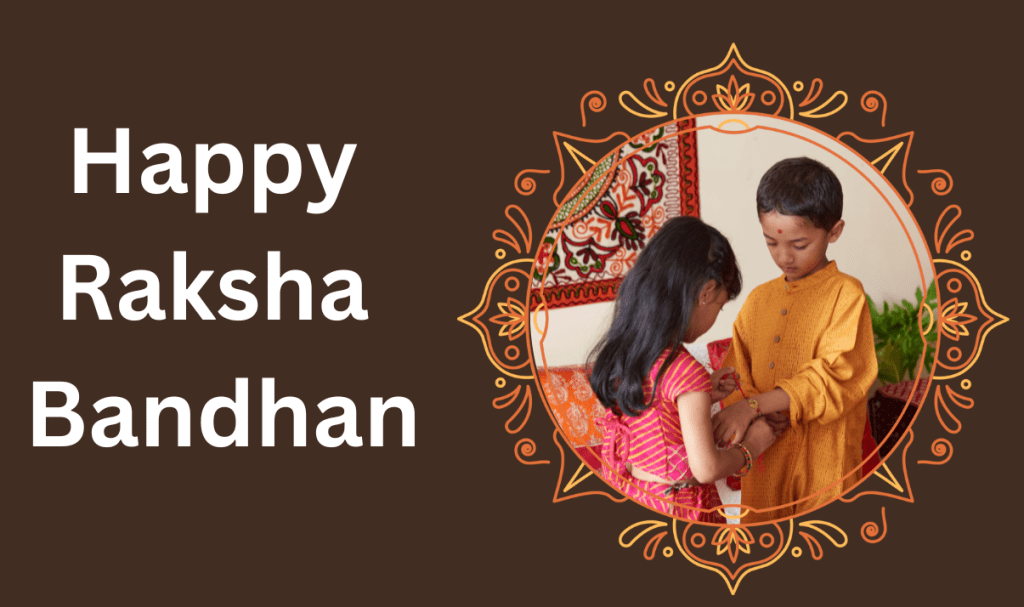
The bond between siblings is the central theme of Raksha Bandhan. The sister wraps a rakhi around her brother’s wrist while wishing him a long life, good health, and happiness. The brother promises to shield her from harm and assist her during her time of need in exchange. The ethical obligation of protection and affection is strengthened by this rite.
2. Strengthening Family Ties
The purpose of Raksha Bandhan is to bring families together. It brings people closer emotionally and improves relationships between family members. Raksha Bandhan serves as a reminder of common roots and relationships in today’s hectic society, when individuals are frequently divided by distance and work.
3. Religious Significance
The festival of Raksha Bandhan is linked to worshiping gods and goddesses in Hinduism, such as Lord Vishnu and Goddess Lakshmi. The thread, or rakhi, is thought to be holy and fortunate. As a symbol of God’s protection, priests at temples frequently tie rakhis to worshippers. In some places, Brahmins symbolically tie raksha sutras around people’s wrists during ceremonies as a blessing.
4. Social Concord and Unity
In addition, Raksha Bandhan fosters social harmony. Historically, it has served to foster trust between diverse social groups and communities. As a token of goodwill and respect, people still wrap rakhis around teachers, soldiers, leaders, and friends. As a result, the festival rises above gender and family barriers to become a worldwide symbol of peace and harmony.
Regional Customs and Variations
The variety of ways in which India’s cultural diversity is expressed is shown in several ways. Raksha Bandhan is observed in different areas.
1. Northern India
Raksha Bandhan is observed with great excitement in northern states such as Uttar Pradesh, Punjab, Haryana, and Delhi. With rakhis, sweets, rice, and diyas, sisters arrange gorgeous puja thalis. Following rituals, delectable meals and desserts such as barfi and laddoo are shared among families.
2. Western India
Narali Purnima, when fishermen present coconuts to the sea deity in exchange for protection prior to returning to their journey, falls during Raksha Bandhan in Gujarat and Maharashtra. The celebration also expresses gratitude for nature and divine protection.
3. India’s east and south
Raksha Bandhan is celebrated as Jhulan Purnima in West Bengal and Odisha in honor of Lord Krishna and Radha. Devotees pray and adorn swings. The celebration is known as Avani Avittam or Upakarma in southern states like Tamil Nadu and Kerala, the festival is celebrated as *Avani Avittam* or *Upakarma*, where Brahmin men change their sacred threads (*yajnopavita*) and perform rituals of purification.
4. Nepal
In Nepal, Raksha Bandhan is called *Janai Purnima*. On this day, men change their sacred thread, and sisters tie *rakhi* to their brothers. It is a festival of purity and renewal, celebrated by both Hindus and Buddhists.
Festivals Today
Raksha Bandhan has evolved alongside the changing times, but it has kept its core. The way people observe the festival has changed as a result of urbanization, globalization, and technological progress.
1. Online Presents and Digital Rakhis
Siblings who live far apart commemorate Raksha Bandhan online in the digital age. Through courier services, online platforms let sisters send rakhis and presents. Sending social media messages, e-greetings, and video calls are all contemporary methods of expressing love.
2. Giving the Word More Meaning
Nowadays, Raksha Bandhan is not only for siblings. It now includes coworkers, cousins, and even pals. To show appreciation for their service and protection, many women tie rakhis to police officers and soldiers. This broader interpretation makes the event more inclusive.
3. Environmentally Friendly Festivities
Eco-friendly rakhis composed of biodegradable ingredients such as as cotton, jute, or seeds have become more popular as environmental consciousness has increased. The equilibrium between tradition and contemporary environmental awareness is reflected in this.
4. Ceremonies at institutions and businesses
Raksha Bandhan events that promote unity, gender equality, and respect are frequently organised by schools, workplaces, and social groups. It is regarded as a day to foster moral principles and mutual respect in society.
Rakhi Thread Symbolism
The rakhi in itself has significant meaning. It is usually composed of silk or cotton threads and may also have beads, sequins, or charms. The act of tying a rakhi signifies:
- Love and Affection: The sister’s sincere prayer for her brother’s health.
- Protection and Responsibilities: The brother pledges to protect his sister.
- The spiritual concept that the thread provides heavenly protection is known as Faith and Blessing.
- Unity and equality: Breaking down societal obstacles via a straightforward, holy action.
- The rakhi is more than just a thread; it represents trust, connection, and moral fortitude.
The Social and Economic Effects
Raksha Bandhan is also very important economically and socially.
Financial Boom: The festival aids local economies by selling rakhis, candy, presents, and clothing. There is a growth in demand, notably for handmade rakhis and gift baskets, among artisans and small enterprises.
Social empowerment: Numerous rural villages and women’s self-help groups make a living by producing and selling rakhis. In this way, the event indirectly promotes women’s empowerment and local crafts.
Charitable Aspect: In recent years, Raksha Bandhan has been used by social groups and NGOs to raise awareness about issues like women’s safety, education, and environmental protection, linking symbolic rakhis to increase social awareness.
Aspects of Ethics and Philosophy
Apart from its rituals, Raksha Bandhan has a profound philosophical and ethical significance.
Duty and Responsibility: It serves as a reminder of people’s ethical duties toward those they love.
Sacrifice and Compassion: The festival’s backstory emphasizes compassion and selflessness.
Universal Brotherhood: It promotes peace and unity by encouraging people to view others as family.
Spiritual Integrity: The thread represents moral fortitude and heavenly connection, directing one to behave morally.
Literary and Artistic Representations of Raksha Bandhan
The festival of Raksha Bandhan has served as an inspiration for poets, writers, and artists throughout the ages. When Bengal was partitioned in 1905, Rabindranath Tagore promoted Raksha Bandhan as a sign of communal harmony, encouraging Hindus and Muslims to tie rakhis to one another as a symbol of oneness. In addition to highlighting the festival’s emotional significance in mainstream culture, Indian film frequently depicts the strong relationship between brothers and sisters.
Worldwide Acclaim
The Indian diaspora, which is dispersed throughout the globe, has helped Raksha Bandhan become well-known worldwide. The Middle East, the United States, the United Kingdom, Canada, Australia, Nepal, and other nations observe it. It is embraced by many multicultural communities as a celebration of love, trust, and interpersonal relationships.
Table of Contents
 Download Image
Wishes
For Brother
“Happy Rakhi to the one who always has my back. May your bond continue to grow stronger every day.”
“Happy Raksha Bandhan! Thank you for being my superhero and the best brother anyone could ask for.”
“Wishing you a Raksha Bandhan filled with joy, love, and laughter. I’m lucky to have you as my brother!”
“To my incredible brother, may this Raksha Bandhan bring you endless happiness and success.”
“On this special day, I want you to know how much you mean to me. Happy Raksha Bandhan, dear brother!”
For Sister
“Happy Rakhi! Your presence in my life is a true blessing. May our bond grow even stronger with each passing day.”
“Happy Raksha Bandhan to my amazing sister! Your love and support are the greatest gifts of all.”
“To the sister who’s been my guide and my friend. Happy Raksha Bandhan! Here’s to many more shared memories.”
“To my wonderful sister, may this Rakhi bring you all the happiness and success you deserve.”
“Wishing you a Raksha Bandhan as special as you are. Thanks for always being there for me, Sis!”
Conclusion
Raksha Bandhan is more than just a holiday; it’s a timeless representation of affection, responsibility, and peace. It promotes the universal principles of compassion, respect, and togetherness, as well as the protective bond between siblings. The act of tying a rakhi serves as a gentle reminder of our shared humanity—that love—in a society that is becoming more and more segregated by borders and disparities. and that blood, religion, and race are not barriers to protection.
The Raksha Bandhan festival has evolved throughout history, from mythological tales to contemporary digital exchanges, retaining its core meaning while adjusting to changing times. It continues to be a shining thread that connects people’s hearts, celebrating relationships that foster and protect, love that knows no limits, and a world united by ties of peace and goodwill.